Understand option decisions before risking serious capital.
Learn structure before action, see thesis and risk more clearly, and build a habit of avoiding impulsive trades.

 Try CSE Free
CSE Option Decision OS
CSE Membership $29/month Charged in USD. Recurring monthly membership.CSE helps self-directed investors and options traders add structure, discipline and risk awareness before putting money at work.
You do not need a large account to benefit from a better decision process. CSE is being built for people who want to learn, start small, stay disciplined and understand risk before acting.
Public-safe view of the current CSE decision-support modules. Sensitive values are masked; human decision remains final.

Active membership includes the Member Workspace with persistent personal positions, complete decision-support modules, the public Resource Library and guides, and CSE Member Market Notes during selected relevant market moments.
CSE adapts to the user's level: Learn to understand options with structure, Build to develop a repeatable decision process, and Pro to use the full manual decision cockpit.
Learn structure before action, see thesis and risk more clearly, and build a habit of avoiding impulsive trades.
Use CSE to structure entry levels, option feasibility, portfolio impact and position discipline before decisions become emotional.
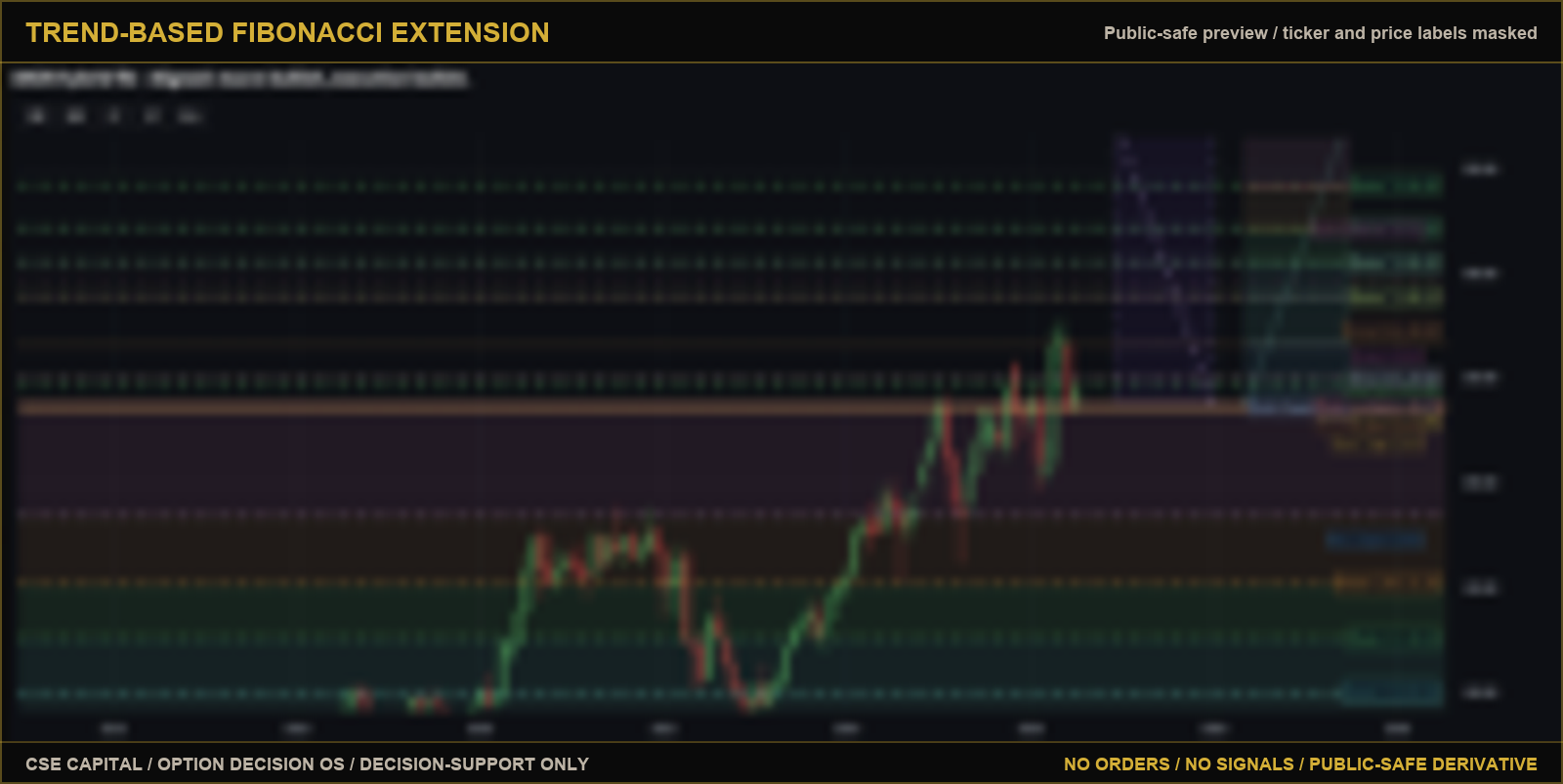
For experienced traders who want the full CSE depth: live observations, Fibonacci structure, macro thesis context and advanced manual decision layers.
CSE helps turn a market idea into a structured decision. It gives a trader a calmer way to check the idea, timing, possible entry area, contract fit and risk impact before acting.
It is not an auto-trading system, broker, signal seller, or promise of returns. It is practical decision-support software for people who want to think more clearly before they risk capital.
CSE is serious software, but it should not feel like an expert-only cockpit. It is useful for people learning options, normal retail traders, disciplined self-directed investors and advanced users who still value structure.
Build a habit of checking thesis, timing and risk instead of jumping from idea to action.
A smaller account can still benefit from a calmer checklist, clearer timing context and better awareness of contract fit.
Use structure to understand exposure, risk and portfolio impact before a position becomes emotional.
The product modules sit behind a simple decision flow. They help the user slow down, understand the setup, check risk and decide whether to observe, validate, hold, reduce or stand aside.
Each layer has a plain role: help the user understand what they are looking at before they act. Product visuals are public-safe derivatives from the current software.
Brings thesis status, trend context, position posture, confidence and decision mode into one view.
Decision value: decide whether to act, wait, validate or stand aside.
Frames Gold, Silver and Bronze entry zones so timing is judged with process instead of impulse.
Decision value: know whether the setup is early, valid, extended or lost.
Organizes trend context, support zones, projection logic and multi-timeframe structure.
Decision value: understand where timing has context.
Evaluates whether a specific option contract fits account size, currency, bid/ask and risk profile.
Decision value: avoid forcing a trade through a contract that does not fit.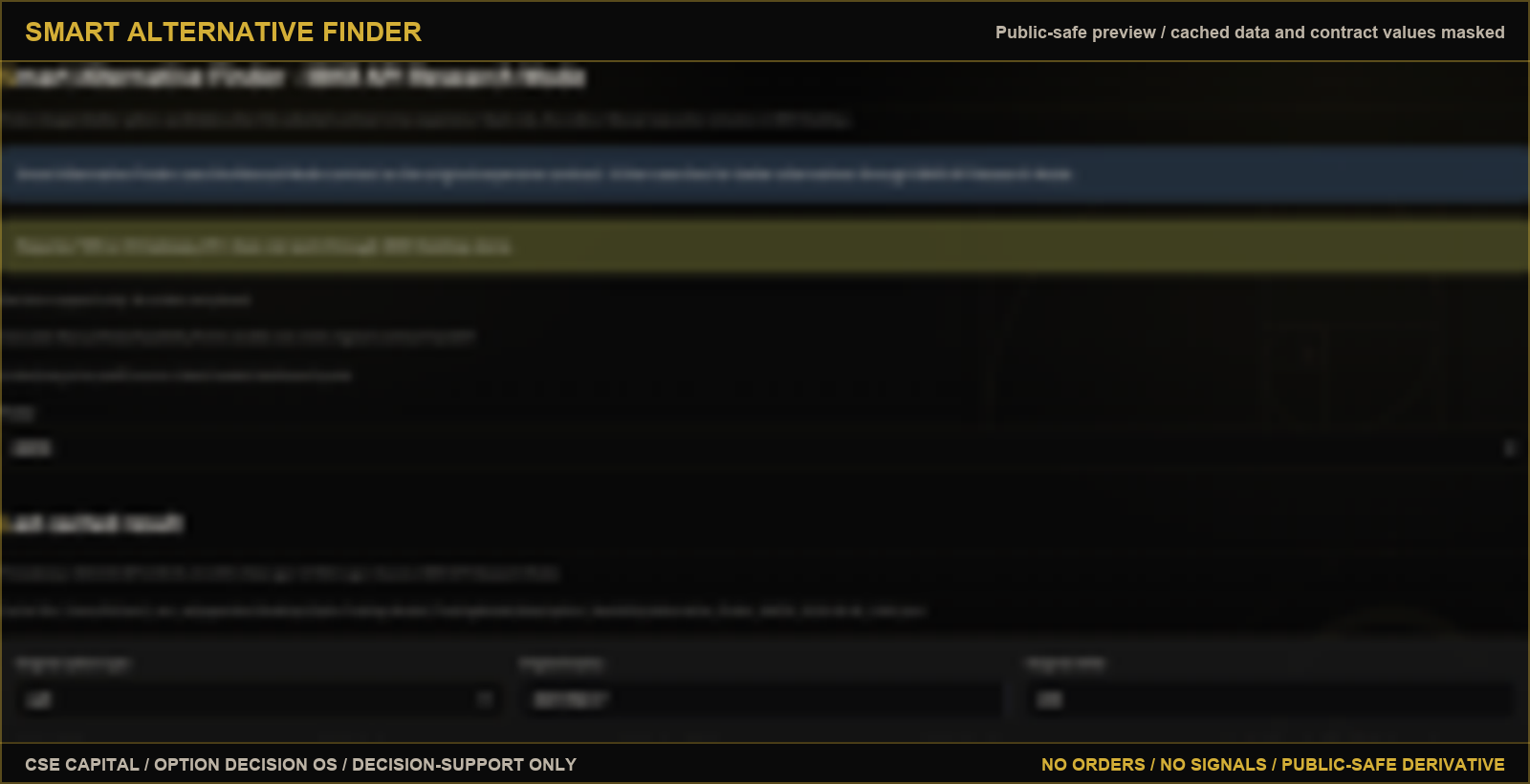
Supports research when the original contract is too expensive or structurally unsuitable.
Decision value: keep the idea separate from the first contract you saw.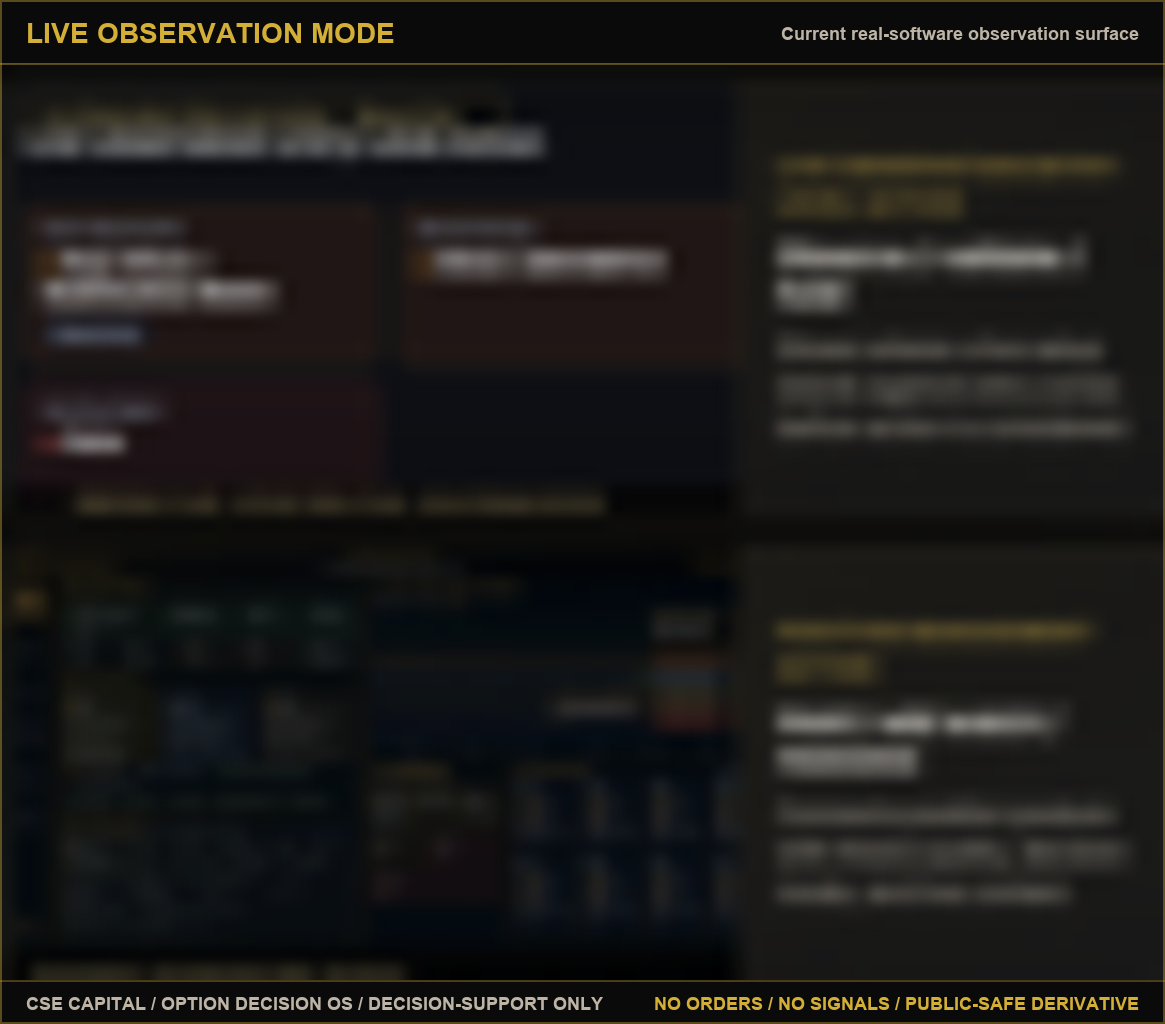
Shows whether a setup is developing, validating, stabilizing, reclaiming, lost or held.
Decision value: observe what is happening before deciding what to do.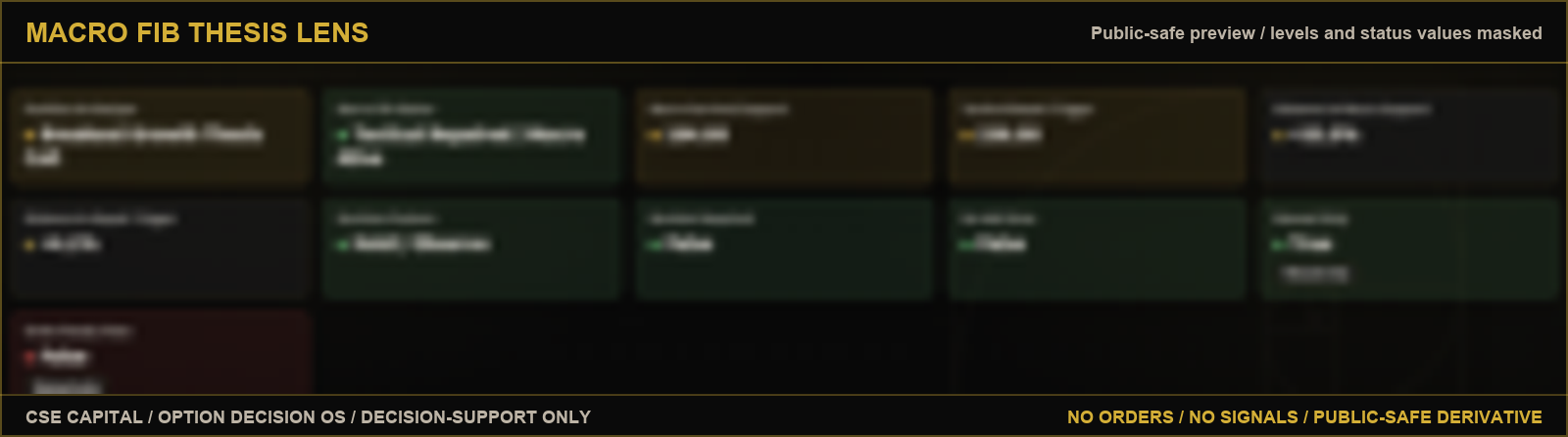
Frames macro status, repair triggers, support distance and whether the thesis remains alive.
Decision value: avoid treating a small move as a complete decision.
Separates watch, validation, hold and readiness language from automatic order behavior.
Decision value: know what needs confirmation before manual action.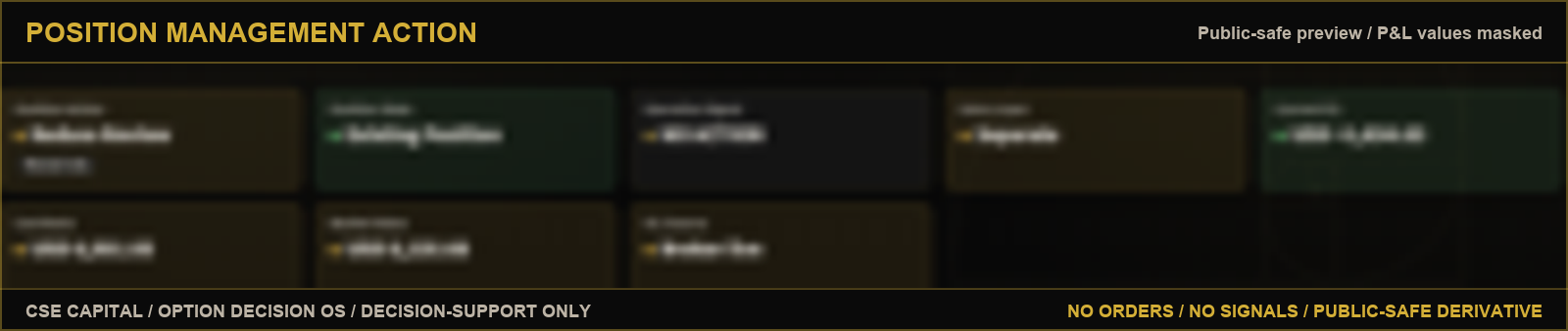
Connects existing exposure to thesis quality, P/L source, decision mode and live context.
Decision value: separate position management from new-entry excitement.
Frames exposure, break-even, target and invalidation scenarios before the user scales risk.
Decision value: see whether the portfolio can absorb the decision.
Separates share exposure from option readiness so shares do not become hidden leverage logic.
Decision value: understand exposure without converting it into a signal.Short product explainers can show how CSE turns a market idea into a structured decision once public YouTube IDs are configured.
Start with the Resource Library, use the User Guide to understand the decision layers, and launch the CSE Option Decision OS Free Preview when you are ready to test the product with your own position.
A free account opens CSE Option Decision OS — Free Preview. Trial and paid membership entitlements open CSE Option Decision OS — Member Workspace.
Do not submit broker credentials, passwords, account numbers, exact portfolio values, payment details, or portfolio documents.